What Is Vibe Design? How to Describe Your Dream Website and Let AI Build It
Vibe design is the hottest trend in AI web design for 2026: describe the mood and feel you want, and the AI handles layout, colours, typography, and code. Here's how it works — and how to try it yourself.
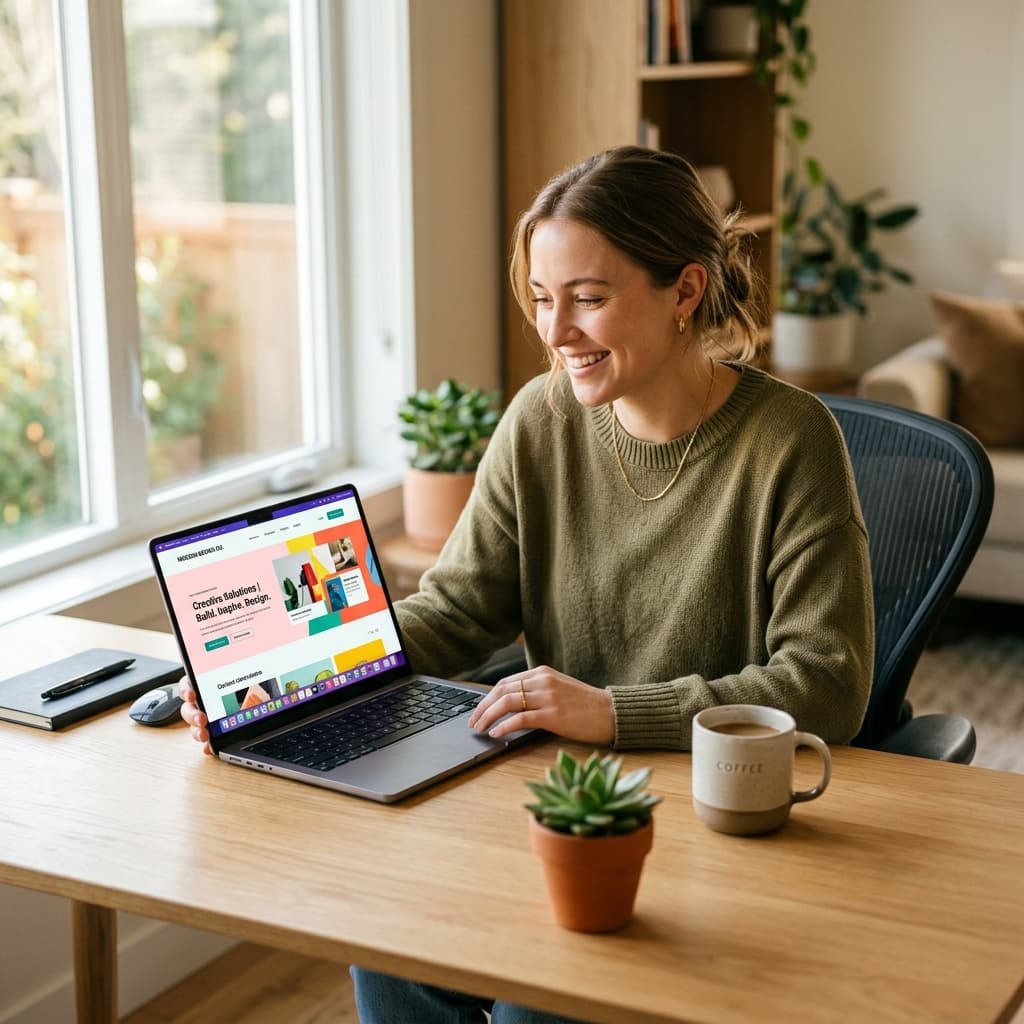
There is a new phrase taking over the AI design world in 2026: vibe design. If you have not heard it yet, you will — because it is changing how everyday people get websites built.
The idea is simple. Instead of picking a template, dragging boxes around a canvas, or writing code, you describe the vibe of the website you want — and an AI builds it for you. Not a wireframe. Not a mockup. A finished, responsive, ready-to-publish website.
What Exactly Is Vibe Design?
Vibe design is the practice of giving an AI model a high-level creative direction — the mood, tone, and intent of a website — and letting it make every design decision: layout, typography, colour palette, spacing, animations, and responsive breakpoints.
Think of it as hiring a designer by saying "I want something that feels warm, professional, and trustworthy — like a neighbourhood law firm that actually cares about its clients" instead of saying "make the header 80px tall and use Helvetica Bold."
The AI translates the vibe into concrete design tokens: a muted navy paired with warm cream, a serif headline font for authority, generous whitespace, and subtle entrance animations that feel reassuring rather than flashy.
Why Is It Trending Now?
Three things changed in 2026 that made vibe design viable for everyday use:
- AI models got dramatically better at code quality. ChatGPT, Claude, and Gemini now produce clean, semantic HTML and CSS that works across browsers without manual fixes. Two years ago, the output needed heavy cleanup. Today, it is production-ready.
- Agentic workflows replaced single-shot prompts. Modern AI tools can iterate on their own output — testing responsive layouts, checking contrast ratios, and refining spacing without you having to ask. The AI reviews its own work before handing it to you.
- Publishing got instant. Tools like SiteDropeliminated the gap between "I have files" and "I have a live website." Drag-and-drop publishing means the vibe-designed site goes from AI output to live URL in under a minute.
Vibe Design vs Traditional Web Design
Here is how vibe design compares to the approaches most people know:
| Approach | How It Works | Time to Launch | Design Skill Needed |
|---|---|---|---|
| Hire a designer | Brief → mockups → revisions → code → deploy | 2–6 weeks | None (you pay for theirs) |
| Template builder (Wix, Squarespace) | Pick template → drag elements → customise → publish | 1–3 days | Some — you make layout decisions |
| AI + generic prompt | "Make me a website" → generic output → heavy editing | Hours of iteration | Moderate — you fix what AI gets wrong |
| Vibe design | Describe the feel → AI builds everything → publish | 10–15 minutes | None |
How to Vibe Design Your Website: A Practical Guide
Step 1: Define the Vibe (Not the Layout)
Forget sections and pixels for a moment. Instead, answer these questions:
- What emotion should a visitor feel when they land on the page?
- If your website were a physical space, what would it look like? (A sleek showroom? A cosy café? A high-energy gym?)
- What three words describe your brand? (e.g. bold, playful, trustworthy)
- Name a website or brand whose aesthetic you admire.
These answers become the foundation of your prompt. If you are not sure how to structure this, the SiteDrop Prompt Creator walks you through it step by step.
Step 2: Write a Vibe-First Prompt
Here is a real example that works:
Create a single-page website for a boutique coffee roastery called "Ember & Grain." The vibe should feel warm, artisanal, and inviting — like walking into a specialty coffee shop on a rainy morning. Use earthy tones (deep brown, warm cream, terracotta accents), a serif headline font, and generous whitespace. Include a hero with a tagline, an "Our Story" section, a list of signature blends with tasting notes, a subscription CTA, and a footer with location and opening hours. Use placeholder images with descriptive alt text. Make it responsive.
Notice what is not in this prompt: pixel values, breakpoint numbers, font sizes, hex codes. The AI fills those in based on the vibe direction — and it does it well, because the creative intent is crystal clear.
Step 3: Generate and Review
Paste the prompt into ChatGPT, Claude, or Gemini. Download the files it produces — usually an HTML file with embedded CSS, or a ZIP with separated assets.
Review the output in your browser. Vibe-designed sites typically need far less iteration than generic prompts because the AI has enough context to make good decisions upfront.
Step 4: Publish Instantly
Drag and drop the files onto SiteDrop. Your site goes live in seconds — SSL, CDN, real URL, all handled automatically. If you want a custom domain, SiteDrop handles DNS too.
Common Mistakes People Make with Vibe Design
- Being too vague."Make it look nice" is not a vibe. "Clean, modern, and confident — like a fintech landing page" is. Specificity is the difference between a generic site and one that feels intentionally designed.
- Mixing conflicting vibes."Fun and playful but also corporate and formal" gives the AI contradictory signals. Pick one dominant direction and let it guide the design.
- Ignoring the image strategy. AI cannot use your actual photos unless you provide them. Tell it to use placeholders and swap them in later — the result will be better than asking the AI to generate images inline.
Is Vibe Design Right for You?
Vibe design is perfect for small business owners, freelancers, solopreneurs, and anyone who needs a professional website but does not have design skills or a design budget. If you can describe what you want your site to feel like, you can vibe design it.
It is not a replacement for bespoke design on complex web applications — but for the one-page business site, portfolio, event page, or landing page that most people actually need? Vibe design gets you there in minutes instead of weeks.
The Bottom Line
The barrier to getting a beautiful, professional website has never been lower. You do not need to learn design tools, fight with templates, or hire an agency. Describe the vibe. Let the AI build it. Publish it instantly.
The whole thing — from blank page to live site — takes under fifteen minutes.
Ready to vibe design your website?
Use the SiteDrop Prompt Creator to describe your ideal website in simple questions — then publish it live in seconds.
Start with the Prompt Creator →Comments
No comments yet. Be the first to share your thoughts!